Compensation principles
Compensation policy and objectives
The compensation policy is an important element of LUKB's efforts to attract, motivate and retain qualified employees with the requisite knowledge and experience in the long term. It is a key element of LUKB's incentive structure, which is geared towards integrity and fairness. It is intended to reward individual performance and at the same time promote teamwork – across departmental boundaries and in the overall interest of the bank. It is linked to LUKB's risk management and control and compliance processes. The compensation policy is also geared towards the long-term success of the company.
The level of compensation and the employment conditions are aligned with those of listed medium-sized and larger cantonal and regional banks.
At the same time, the compensation policy defines the basis for the ratio of fixed and variable performance-related compensation for individual employees, taking into account individual duties, roles and responsibilities. A key objective of the compensation policy is to reconcile the interests of employees with those of investors and thus create sustainable added value for the bank. The compensation policy applies to all employees of the bank. It contains a detailed description of the compensation-related principles, objectives, programmes, standards and processes and is based on the requirements set out in the Swiss Code of Obligations1) and other regulations relevant to LUKB. In particular, the LUKB Group voluntarily takes into account the key points of FINMA Circular 2010/01 ‘Remuneration schemes’2) as a guideline for its compensation policy. The Board of Directors may delegate decision-making authority on individual points to the NCC-BoD or the Executive Board in accordance with LUKB's delineation of powers and responsibilities. The compensation policy is regularly reviewed under the leadership of the NCC-BoD and updated as necessary. All changes must be approved by the Board of Directors.
Compensation system in general
LUKB's compensation system consists of the following elements:
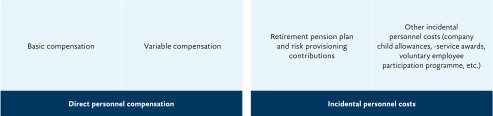
Other benefits in kind and lump-sum expenses may also be paid. If these constitute a form of compensation under tax law, they are listed under other incidental personnel costs. Lump-sum expenses not constituting a form of compensation (see Section ‘Other employment conditions’) are only mentioned for the sake of completeness. The basic compensation is paid out in 13 instalments. Half of the 13th instalment is paid out in June and the second half in December. The amount of variable compensation depends on the corporate results, the role and the individual achievement of objectives according to the employee assessment and may fluctuate over the time axis. The amount of variable compensation as a percentage of direct personnel compensation depends in particular on the function and is normally highest at Executive Board level.
Other employment conditions
Employees usually have a permanent employment contract.
LUKB employees generally retire when they reach the age of 65. Different age limits may be set for individual employees. Members of the Executive Board retire between 61 and 63 years of age, usually at 62. In accordance with the Employee Regulations applicable to all employees, early retirement is possible from the age of 58. There is no entitlement to continued employment after retirement in accordance with the regulations or employment contract. However, the bank may offer continued employment up to the age of 70 on a case-by-case basis, whereby each case is judged on its individual merits.
Employee and employer contributions to pension funds and incidental personnel costs are regulated. Expenses incurred in connection with business activities are borne by the bank. In order to simplify the procedures, lump-sum expenses are paid to defined groups of employees. These lump-sum expenses are agreed with the tax authorities and do not constitute compensation.